

Many people know the feeling that, once upon a time, a weekend actually meant something. It did not require anything special: a little more sleep, a slower morning, less rushing around, and by Monday, somehow, you had pulled yourself back together. You were not necessarily fully rested, but something in you had settled again.
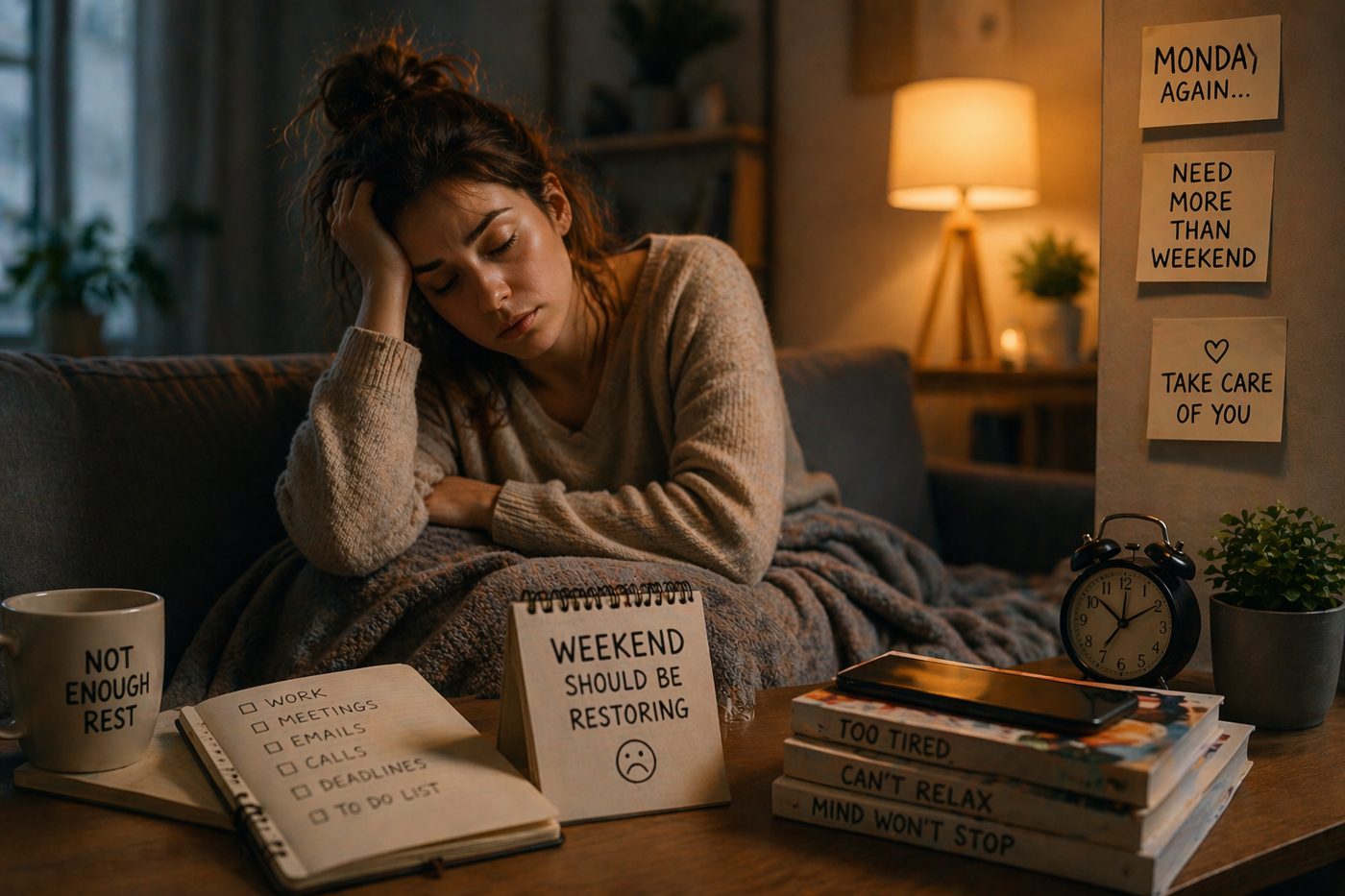
Today, however, many people experience the exact opposite. The weekend arrives, and that inner relief they had been waiting for all week simply does not come. On Saturday they may sleep a little longer, on Sunday they may genuinely try to rest, and yet they still feel that, in truth, they have not recovered. By Sunday evening there is no calm inside them, only the same dull fatigue, the same inner tension, now often mixed with a quiet sense of guilt, because in theory they had two whole days that should have helped.
At times like this, many people immediately start looking for the fault in themselves. They think they must be using their weekends badly. They should rest more efficiently, sleep more, go to bed earlier, spend less time on their phones, relax better. There may be some truth in those thoughts, but usually the situation is not that simple. Very often, the weekend stops helping not because there is too little time or because someone is managing it badly, but because the body is no longer missing just a short break. It is missing something deeper: real restoration.
Modern life does not simply make people tired. More often, it keeps them in a constant state of readiness. And those two are not the same thing. After ordinary tiredness, a quieter day can still help a great deal. But long-term overload is different. It is not only energy that gets depleted; the inner ability to settle down begins to wear thin as well. A person spends the whole week paying attention, adapting, coping, making decisions, carrying problems, swallowing tension, moving from one role to another, while rarely having a moment to truly let go. It is not only work that drains them, but everything that surrounds and trails behind it: constant availability, thoughts running in the background, unresolved conversations, unprocessed tension, too much stimulation and too little real quiet.
This is exactly why the weekend no longer automatically brings what it may once have brought. If someone has been living under pressure for a long time, there is no guarantee that two days away from the office will be enough to bring them back. In fact, sometimes it is the weekend that reveals just how deep the exhaustion really is. During the week, momentum, obligation, and speed carry a person forward. But once the weekend arrives and things become quieter, what had been masked by constant motion starts to surface: restlessness, irritability, dullness, that strange feeling of having no real strength or desire for anything, while rest itself does not feel good either.
Many people live exactly this, only they do not call it by name. They notice that even by Saturday morning they still cannot slow down. Or that by Sunday afternoon the thought of Monday is already tightening something inside them. Or that the whole weekend passes in a blur, moving from one thing to another, and by the end they feel as if they were hardly present in it at all. Others experience the opposite: they are so worn out that they sleep through most of the weekend, or numb themselves through it, and afterward feel even worse because yet another two days have passed without truly restoring them.
This is where it helps to distinguish between a few different states. There is simple fatigue, when the week was heavy but a good night’s sleep, a quieter day, a bit of fresh air can still make a noticeable difference. Then there is overload, when free time by itself no longer brings relief because the body has been functioning in tension for too long. And then there is the point where tiredness becomes constant, sleep no longer restores, the weekend no longer replenishes, irritability increases, and a person can barely remember what it feels like to be genuinely lighter inside. That last state should not be brushed aside.
The body usually signals all of this as well, only many people have become so used to the signs that they no longer truly notice them. A tense neck, hard shoulders, a back that is always bracing, shallower breathing, restless sleep, waking up tired, digestive disturbances, greater irritability, and that odd sense that even when there is no danger outside, nothing inside really settles. These are not always dramatic symptoms, but together they say a great deal about the state the body is in.
There is one simple question that can help here: after the weekend, did something inside me actually feel lighter, or did time simply pass? Those are not the same thing. You may have had two free days and still not become calmer, softer, more spacious, more present. If the answer, again and again, is that the weekend passed but nothing inside truly shifted, that is already an important sign.
It may also help to check in with yourself in a more concrete way. It is worth paying closer attention if you notice that even after the weekend you do not feel lighter, that by Sunday evening you are already tense again, that guilt appears when you try to rest, that your body is constantly holding tension somewhere, and that free time feels more empty or unsettling than genuinely calming. Taken together, these signs point to more than a passing bad mood. They suggest that your system may not have had access to real rest for quite some time.
It is also important to say that persistent fatigue and weekends that no longer restore you are not always caused only by lifestyle factors or nervous system overload. There may also be hormonal issues, metabolic problems, sleep-quality disturbances, deficiencies, or other physical factors in the background. So if someone has been feeling exhausted for a long time, if sleep no longer refreshes them, or if their general state keeps declining, this is something worth taking seriously and, when needed, having properly checked. That does not make overload any less real; it simply means that sometimes a fuller understanding requires looking from more than one angle.
This is why, in the Seishin approach, I do not focus on why someone cannot endure more, or why they cannot use their weekends better. What I pay attention to instead is what their body has been carrying silently for too long. What tension it is holding. How accustomed it has become to inner readiness. How unfamiliar the state of truly letting go has become.
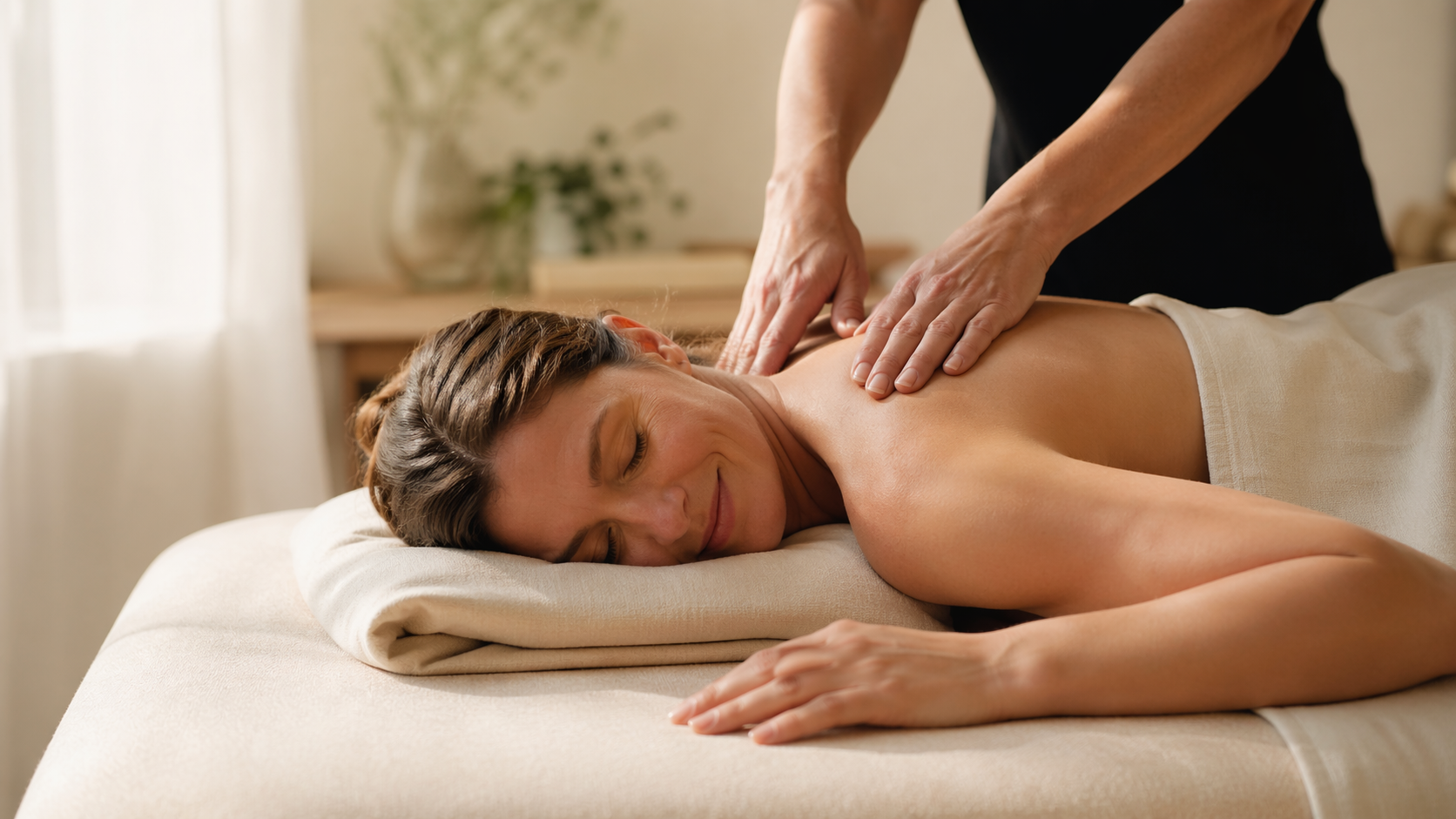
For many people, the first real relief does not begin when they manage their free days more efficiently. It begins when their body is finally given a situation in which it can safely let itself ease down. A place where it does not have to perform, focus, stay composed, or hold itself together. This is where Seishin massage can help. Not as a quick fix or some miracle remedy, but as real support for the body. A way for tension to start dissolving, for the breath to deepen, and for the system to slowly come out of that constant holding pattern in which so many people live without even fully realizing it.
In my experience, the most important change at first is often not dramatic. It is not that a person suddenly becomes “finished” with the problem and everything is solved. It is something smaller, but very real: for the first time in a long while, they feel what it is like not to have to hold themselves so tightly. They breathe more deeply. Something inside becomes quieter. It is through these small but genuine experiences that the body begins to learn again.
This is why consistency matters here more than many people think. If someone has been functioning in overload for months or years, very rarely will one good session or one good weekend bring them fully out of it. Just as the tension did not build up in a single day, release usually does not happen all at once either. The body relearns through repeated experience that it does not always have to remain on alert. Calm does not usually return through a single decision, but gradually, as a person meets it again and again.
For some people, it is their own exhaustion that first brings them closer to Seishin. They simply want to feel lighter in their own bodies, sleep better, carry less tension, and live with less constant inner pressure. For others, over time, a deeper question begins to arise. They do not only want relief; they want to understand how the body stores strain, why touch, presence, and attention matter so deeply, and how this quality can not only be received but also learned and passed on. This is where the path of learning begins.
So if you feel that the weekend no longer helps the way it used to, you do not have to jump to the conclusion that something is wrong with you. It is far more likely that your body is no longer missing a short pause, but a deeper kind of reordering. And that cannot always be solved simply by having more time. Sometimes what is needed is real care for body and soul. The kind of attention that does not place yet another demand on you, but helps you return toward a calmer, more human state.
This is where Seishin massage can be a real support. And if this perspective speaks to you more deeply than that, then it may also be worth approaching it through the path of learning.
Bágyok Károly
Seishin Grand Master